




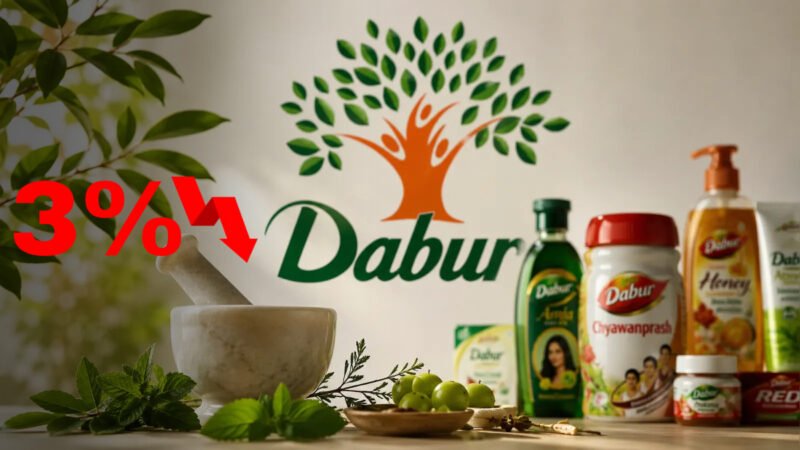
Dabur India has reported a modest reduction in advertising expenditure for the second quarter of FY27, even as the FMCG company delivered double-digit revenue and profit growth. The company spent ₹226.59 crore on advertising and publicity during the July–September 2026 quarter, down approximately 3% from ₹233.57 crore in the corresponding period last year.
The figures present an interesting development in India’s consumer advertising market: a major FMCG advertiser has recorded stronger business growth while reducing its quarterly advertising outlay.
According to Dabur’s financial results released on November 4, 2026, consolidated revenue from operations increased 11.6% year-on-year to ₹3,563.07 crore. Profit attributable to owners of the company rose 11.7% to ₹505.50 crore.
Advertising Takes a Smaller Share of Revenue
Dabur’s advertising and publicity expenditure declined from ₹233.57 crore in Q2 FY26 to ₹226.59 crore in Q2 FY27.
The change becomes more noticeable when advertising spending is compared with quarterly revenue.
Advertising expenditure represented approximately 6.4% of revenue in Q2 FY27, compared with around 7.3% in the year-ago quarter.
This indicates that advertising spending grew more slowly than the company’s overall business during the period. However, the numbers alone do not establish whether the reduction resulted from improved marketing efficiency, changes in campaign timing, media costs or a deliberate budget decision.
For advertisers and marketing professionals, the distinction matters: lower expenditure does not automatically mean lower brand investment or weaker advertising activity.
First-Half Spending Tells a Different Story
Looking at the first six months of FY27 provides a broader picture.
Dabur’s advertising and publicity expenditure for April–September reached ₹456.05 crore, compared with ₹435.53 crore during the corresponding period last year. This represents an increase of approximately 4.7%.
The difference between quarterly and half-yearly figures suggests that the Q2 decline should not be interpreted as an overall reduction in the company’s advertising investment.
Instead, the first-half numbers indicate that Dabur continued to spend more on advertising year-on-year, despite the lower outlay recorded in the September quarter.
FMCG Business Records Broad-Based Growth
Dabur’s India FMCG business grew 10.7% during Q2 FY27, supported by underlying volume growth of 5.5%.
Among its major domestic business segments, Food and Beverages recorded the strongest growth at 17.4%. Home and Personal Care grew 10.9%, while Healthcare registered 6.9% growth.
The company’s international business also delivered a strong performance, expanding 20% in rupee terms during the quarter.
These results indicate that growth was not limited to one product category or geography. The company also reported that its premium portfolio grew at four times the pace of regular brands and accounted for 20% of its domestic business.
Premiumisation Changes the Marketing Equation
One of the important developments in Dabur’s results is the performance of its premium portfolio.
Premiumisation is becoming an important strategy for FMCG businesses seeking to increase value from established product categories. Instead of relying only on volume growth, companies are attempting to encourage consumers to purchase higher-value products.
This can influence advertising strategy. Premium products may require different positioning, stronger product storytelling and more targeted communication than mass-market offerings.
For marketing teams, the challenge is to balance investments across established brands, premium launches and categories experiencing faster growth.
Dabur’s reported premium portfolio performance highlights the commercial importance of this strategy, although the company has not attributed its quarterly advertising expenditure movement to premiumisation.
What the Numbers Mean for Advertisers
Dabur’s Q2 performance offers an important reminder that advertising expenditure and business growth do not necessarily move in the same direction every quarter.
A company can report higher revenue while spending less on advertising during a particular period. Equally, an increase in advertising budgets does not guarantee stronger sales or profitability.
Marketing professionals need to examine spending alongside revenue, volume growth, category performance and the timing of campaigns.
The first-half figures are especially relevant because they show why quarterly comparisons should be interpreted carefully. A single three-month period may not represent the direction of a company’s annual marketing strategy.
The Bigger Picture
Dabur’s latest results offer a useful case study for India’s advertising industry. The company recorded double-digit revenue growth, strengthened its premium portfolio and reduced its Q2 advertising expenditure compared with the previous year.
Yet its first-half advertising investment remained higher.
For brands and agencies, the larger lesson is that marketing budgets need to be evaluated over meaningful periods and against business outcomes rather than isolated spending figures.
The bigger takeaway: The question for advertisers is no longer simply how much a company spends on advertising. It is how effectively that investment supports brand strength, consumer demand and sustainable business growth.
Company: Dabur India Limited
Reporting period: Q2 FY27, ended September 30, 2026
Results announced: November 4, 2026
Official company information: Dabur India