





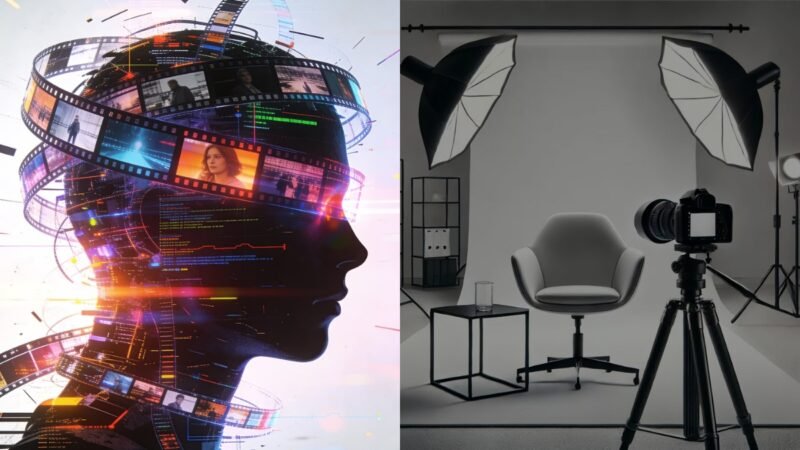
Indian advertisers are increasingly using artificial intelligence to cut production timelines, create more campaign variations and redirect budgets, but the technology is also putting creative quality and brand authenticity under the spotlight.
The Economics of Making an Ad Are Changing
Advertising production in India is undergoing a fundamental shift. Brands that once depended on lengthy shoots, elaborate production arrangements and multiple rounds of creative development are increasingly experimenting with AI-powered workflows.
The attraction is straightforward: produce more content, move faster and reduce costs.
Traditional television commercials can involve substantial investments in locations, talent, equipment, post-production and logistics. Depending on the complexity, a conventional 30- to 90-second commercial can cost ₹50 lakh or more.
AI-powered production offers an alternative. Brands can explore concepts, visualise products, adapt scripts, generate assets and create campaign variations without repeating every stage of traditional production.
For advertisers operating in a competitive and fragmented media environment, the shift could change how production budgets are planned.
Festive Season Becomes the Testing Ground
The festive season has become an important period for AI experimentation in India. Brands across categories are under pressure to produce advertising that feels timely, local and relevant across different audiences.
According to industry reporting by Mint, festive advertising represents approximately 34–35% of India’s annual advertising expenditure, estimated at ₹60,000–62,000 crore.
AI is helping marketers develop creative variations for different audiences, languages, product presentations and digital platforms. Instead of relying on one campaign asset, brands can explore multiple executions and adapt content more quickly.
This flexibility is particularly valuable during high-pressure periods when campaign windows are short and consumer attention is spread across platforms.
Brands Are Seeing Faster Creative Workflows
The benefits are already being reported by advertisers experimenting with AI.
Ferns N Petals has said AI-supported creative workflows increased its speed of creative execution nearly fourfold, helping the brand develop, test and deploy more creative material in less time.
RENÉE Cosmetics reported that AI-generated advertising delivered 30.16% higher engagement compared with conventional creatives in its campaigns, while reducing production time by an estimated 70–80%.
These are company-reported results, not industry-wide benchmarks. Performance can differ depending on the campaign, platform, audience, creative quality and measurement methodology.
Nevertheless, the figures illustrate why marketers are increasingly looking at AI as more than a creative novelty.
Savings Could Change Where Brands Spend
The most important development may not be lower production costs alone. It could be how brands redistribute the money they save.
When production becomes less expensive, advertisers may have greater flexibility to invest in media distribution, regional adaptations, retail experiences, creator partnerships, consumer research or additional campaign testing.
FreshTerra, for example, reportedly used AI during early-stage script ideation, packaging visualisation and copy adaptations to shorten development cycles. The company said savings from reduced physical samples and early design iterations could be redirected toward in-store experiences, supply-chain initiatives and local visibility.
This suggests a broader change in marketing economics: budgets may increasingly shift from making a single polished asset to building a wider campaign ecosystem.
Human Creativity Remains the Deciding Factor
Despite its advantages, AI cannot guarantee a strong campaign.
A technically impressive advertisement can still fail if its story is irrelevant, its product representation is inaccurate or its message lacks emotional connection.
Brands operating in categories such as food, beauty, jewellery and luxury products also need to be careful that AI-generated visuals do not misrepresent what consumers are buying.
The industry’s challenge is to balance speed with quality control. Faster production requires stronger review processes, particularly when multiple versions of an advertisement are being created simultaneously.
The New Production Advantage
AI is changing advertising production from a largely linear process into a more flexible system of creation, testing and adaptation.
The brands that benefit most may not simply be those producing the largest volume of AI-generated content. They will be those using the technology to remove unnecessary production friction while protecting the human insight that makes advertising memorable.
In the emerging advertising economy, efficiency can lower the cost of making an idea, but creativity will still determine whether that idea is worth making.
Source
– Mint – AI takes centre stage in festive ads as brands seek faster, cheaper campaigns — Published October 26, 2026.