





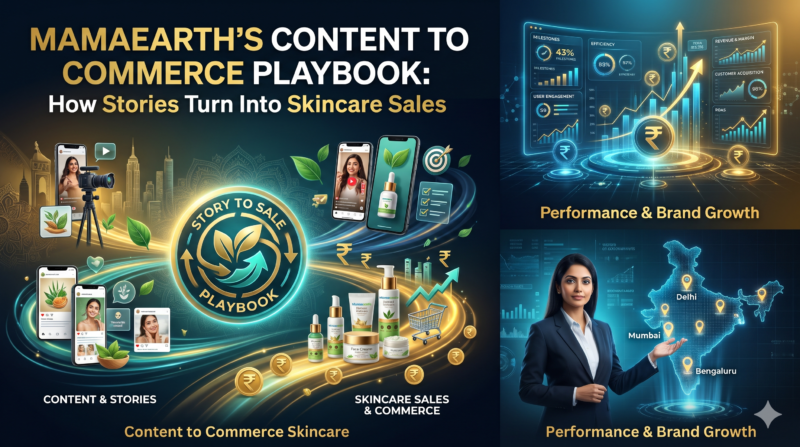
By combining digital storytelling, influencer marketing, consumer insights and online shopping, Mamaearth helped build a beauty brand that could discover customers on the internet and turn that attention into product demand.
1. When Content Becomes a Business Engine
Mamaearth’s growth offers a useful example of the content-to-commerce model, in which brands use content to attract consumers, educate them about products and encourage purchases.
Rather than relying exclusively on traditional advertising or physical retail, the company built much of its early presence through digital channels. Product explainers, social media campaigns, creator collaborations and ingredient-focused communication helped introduce the brand to consumers already searching online for personal care solutions.
Founded in 2016 by Varun and Ghazal Alagh, Mamaearth emerged from a search for baby-care products that matched the founders’ expectations around safety and effectiveness. The brand expanded from baby care into skincare, haircare and other personal-care categories.
Its parent company, Honasa Consumer, describes itself as a digital-first beauty and personal-care business that combines consumer-focused innovation, technology and an omnichannel distribution strategy.
The important distinction is that content is not the final product. It is a route through which consumers discover, understand and ultimately buy the product.
2. Solving a Consumer Problem Before Selling
Successful content-to-commerce strategies begin with a consumer question.
A shopper might want to understand which ingredients suit a particular skin concern, how to build a haircare routine or what to consider when choosing products for a child. Brands can address these questions through educational posts, demonstrations, product descriptions and videos.
Mamaearth’s nature-inspired positioning gave it a recognisable communication territory. Its products and campaigns drew on familiar ingredients and everyday personal-care needs, helping consumers connect the brand with a particular set of expectations.
The company’s official website brings product discovery and shopping together, allowing consumers to explore its categories and move from learning about a product to purchasing it.
This connection between information and transaction is central to the model. When a consumer encounters a product through content, the buying journey can continue directly to a product page rather than requiring a separate search.
3. Influencers Turn Reach Into Relevance
Influencer marketing can make product communication feel more contextual. Creators demonstrate how products fit into routines, discuss ingredients and present use cases to audiences who already follow their content.
For a beauty brand, this format offers something a conventional advertisement may struggle to deliver: a product shown in a recognisable everyday setting.
Honasa’s official annual reports describe its approach to digital marketing, influencer engagement, consumer communication and data-driven brand building. The company has explained how it uses online engagement to identify emerging preferences and develop more relevant products and campaigns.
However, influencer reach alone does not guarantee sales. The content must be credible, the product must meet expectations, and the purchasing journey must be straightforward. Advertising disclosures and substantiated product claims also remain essential.
4. Data Connects Content With Product Innovation
Content-to-commerce works best when feedback travels in both directions.
Search behaviour, customer reviews, product-page activity and purchasing patterns can reveal what consumers are interested in and where they face confusion. These signals can inform future content, product development and marketing decisions.
Honasa’s annual-report disclosures describe a broader brand-building approach that uses consumer insights, technology and data-driven marketing to identify trends and develop differentiated propositions.
This is particularly valuable for a company operating several brands. Mamaearth focuses on nature-inspired personal care, while other Honasa brands address different consumer needs. The group can use learnings from one brand to improve its overall understanding of online discovery and shopping behaviour without making every brand communicate in the same way.
5. From Digital Discovery to Physical Shelves
A content-led business cannot assume that every customer will complete a purchase online.
Consumers may discover a product on social media but prefer to buy it at a pharmacy, supermarket, beauty store or neighbourhood retailer. This makes distribution an important part of the content-to-commerce journey.
Honasa’s published annual reports describe its expansion across direct-to-consumer websites, online marketplaces, general trade, modern retail and exclusive brand outlets.
Physical availability gives digital awareness more opportunities to translate into sales. It can also help consumers encounter products they first learned about online.
The model therefore evolves from content driving online transactions to content supporting demand across multiple channels.
6. The Economics Behind the Model
The approach has costs. Content production, creator partnerships, advertising, discounts, fulfilment and customer acquisition can all affect profitability.
A campaign generating millions of views may still underperform if it attracts the wrong audience or fails to produce repeat purchases. The more useful measures include conversion rates, customer acquisition costs, repeat buying, average order value and the contribution generated after marketing and distribution expenses.
For Mamaearth, the long-term test is whether digital discovery creates lasting consumer relationships rather than one-time purchases.
7. The Bigger Lesson
Mamaearth demonstrates how content can become part of a consumer brand’s commercial infrastructure. It introduces products, explains their relevance, creates familiarity and directs interested shoppers towards a transaction.
But the model is not simply about posting more videos or partnering with more influencers. It requires a connected system linking consumer insight, credible communication, product quality, convenient purchasing and reliable distribution.
The central lesson is that content-to-commerce works when content does more than capture attention: it helps consumers make a decision, while the product and buying experience give them a reason to return.