




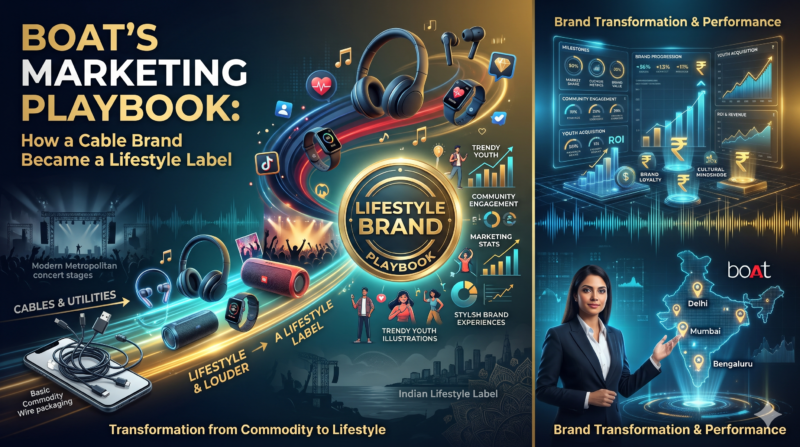
From durable charging cables to celebrity-backed earbuds, boAt built a consumer electronics identity around music, youth culture, affordable style and a community of fans known as “boAtheads”.
A charging cable is not usually a product people get excited about. It is something they buy when the old one breaks, often choosing whichever option is affordable and available.
BoAt saw an opportunity in that ordinary purchase. Instead of presenting accessories as interchangeable electronics, the Indian brand built its identity around a more emotional proposition: technology could be fashionable, expressive and connected to the music and lifestyle of young consumers.
The result was a brand that expanded from cables and chargers into earphones, headphones, speakers, smartwatches and other accessories. Its marketing became as recognisable as its products, featuring Bollywood actors, cricketers, musicians and a founder who became a familiar face on television.
The strategy offers an important lesson for consumer businesses: sometimes, the biggest marketing opportunity is not to sell a better-known product category, but to change how customers think about it.
1. The Beginning: Solving an Everyday Problem
boAt was founded by Aman Gupta and Sameer Mehta, with the business beginning its journey in 2014, according to the company’s official brand history.
The early opportunity came from a practical consumer frustration: charging cables were frequently damaged or replaced, and buyers wanted products that were durable without being prohibitively expensive.
Rather than immediately positioning itself as a premium technology company, boAt focused on affordable products with a stronger design identity. Its early communication highlighted the durability of its cables and gave online shoppers a clear reason to consider the brand.
In an account published on its website, boAt describes how an early Facebook advertisement contrasted a damaged Apple cable with its own durable alternative. The message was direct, product-focused and aimed at consumers who already understood the problem.
Read more in boAt’s account of its marketing journey.
This early strategy established an important principle: the brand did not need to invent a new consumer need. It needed to communicate a familiar problem more effectively.
2. From Electronics to Self-Expression
The turning point was the decision to market audio products as lifestyle accessories rather than merely technical devices.
For younger consumers, earphones and headphones are visible parts of everyday life. They accompany workouts, commutes, gaming, travel and music. Their appearance can matter alongside battery life, sound quality and price.
boAt leaned into this overlap between technology and identity. Its products featured bold colours, contemporary designs and accessible price points, helping the brand appeal to consumers who wanted fashionable electronics without paying luxury prices.
The company has described its ambition as creating products for India’s young, style-conscious consumers. Its official brand story also uses the term “boAtheads” to describe its community of customers.
That community positioning matters. A product buyer makes a transaction; a brand community gives customers a shared identity they can recognise and participate in.
3. Bollywood, Cricket and the Celebrity Machine
boAt’s marketing strategy has consistently drawn on three powerful elements of Indian popular culture: Bollywood, cricket and music.
The company has worked with celebrities and influencers to associate its products with the lifestyles its customers aspire to. Instead of relying on one ambassador to represent every product, different personalities can reach different audiences and reinforce different aspects of the brand.
This approach allows boAt to connect audio products with fitness, sport, entertainment and youth culture. It also makes the brand visible in the places where its target audience already spends time.
As Amazon India’s profile of Aman Gupta explains, understanding consumers and building a relationship with the boAtheads community were central to the company’s approach.
Celebrity marketing is not automatically effective, however. Its value depends on whether the endorsement strengthens product consideration and whether the resulting sales justify the expense. boAt’s broader lesson is the importance of matching personalities to the audience rather than treating celebrity visibility as an objective in itself.
4. Digital-First Marketing and the Power of E-Commerce
boAt’s early growth was closely connected to online marketplaces and direct communication with consumers. Selling online helped the company reach customers without initially needing a large traditional retail network.
Digital channels also created opportunities to test advertisements, observe customer reactions and promote products around shopping events.
Amazon was particularly relevant to the company’s early journey. In its interview with Gupta, Amazon noted that boAt’s first product was sold on Amazon.in.
Over time, the brand expanded its presence beyond digital marketplaces. This broadened distribution can improve accessibility, but it also introduces new costs associated with retail partnerships, inventory and in-store marketing.
The strategy therefore evolved from an online-first model into a broader consumer electronics business.
5. Aman Gupta: The Founder Becomes Part of the Brand
boAt received another marketing advantage when Aman Gupta became widely recognised through Shark Tank India.
His energetic personality, memorable expressions and public discussions with entrepreneurs helped make him familiar to audiences beyond electronics shoppers. That visibility created an additional association between the founder and the brand.
The arrangement illustrates the potential of founder-led marketing. When an entrepreneur becomes recognisable, the company can benefit from media attention that extends beyond conventional advertisements.
But it also creates a challenge: the brand must develop an identity that survives independently of its founder. Products, customer experience and consistent communication ultimately need to sustain the relationship.
6. Did the Marketing Translate Into Business Results?
The financial picture suggests that boAt built significant scale, although its growth has not been uninterrupted.
According to YourStory’s October 2025 report, Imagine Marketing, boAt’s parent company, returned to profitability in FY2024–25, reporting a consolidated net profit of approximately ₹60 crore after a loss of around ₹80 crore in the previous financial year.
Revenue growth remained a challenge, demonstrating that brand recognition alone cannot eliminate competitive pressure, changing consumer demand or the economics of consumer electronics.
The company has also faced a more difficult market for wearables, where product cycles are short and competitors can quickly imitate features and pricing.
These developments underline the difference between building a famous brand and maintaining a consistently profitable business. Marketing can generate attention and demand, but product quality, distribution, pricing and cost discipline determine whether that demand creates lasting value.
What Marketers Can Learn From boAt
boAt’s journey offers five lessons for consumer brands:
- Reframe ordinary products. A functional accessory can become a lifestyle purchase when design and identity matter to customers.
- Know the audience. Music, cricket and entertainment provided natural connections to the consumers boAt wanted to reach.
- Build a recognisable community. The boAtheads identity helped make the brand more than a collection of products.
- Use digital distribution strategically. Online marketplaces helped the company reach consumers before expanding into other channels.
- Connect marketing to economics. Celebrity campaigns and brand visibility must ultimately support sales, retention and sustainable margins.
The Final Verdict
boAt’s marketing success came from recognising that young consumers were buying more than cables and earphones. They were buying accessories that fitted their music habits, personal style and everyday identity.
The company built a distinctive voice through digital-first advertising, celebrity partnerships and a community-oriented brand image. That approach helped transform a largely functional product category into something consumers could associate with lifestyle and self-expression.
But the next stage requires more than strong advertising. The brand must keep improving products, defending its position against competition and converting recognition into profitable growth.
boAt’s biggest marketing achievement was not making a cable look exciting. It was teaching consumers to see affordable electronics as an extension of who they are.