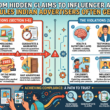




India’s digital advertising and e-commerce ecosystem is facing growing scrutiny over a practice that can influence consumers without making the persuasion obvious: dark patterns.
These are deceptive user-interface or design practices intended to mislead users or manipulate them into taking actions they may not have originally intended. In India, the Central Consumer Protection Authority (CCPA) formally regulated dark patterns through guidelines notified in 2023. The rules apply to platforms, advertisers and sellers operating in India.
What Are Dark Patterns?
Dark patterns are not simply aggressive advertising. They involve the design of websites, apps or digital journeys in ways that can influence consumer decisions through misleading interfaces, confusing language or hidden choices.
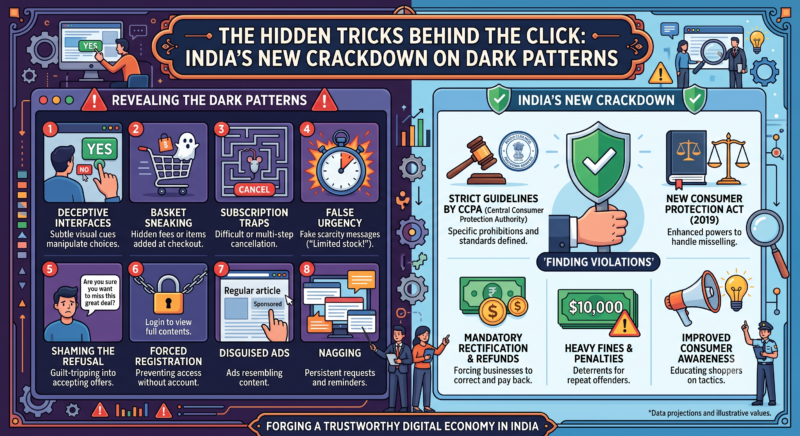
The CCPA’s framework identifies 13 specified dark patterns, covering practices ranging from false urgency and hidden charges to subscription traps and disguised advertisements.
The guidelines state that no person, including a platform, should engage in a dark-pattern practice covered by the framework.
False Urgency
One common example is creating artificial pressure to make consumers purchase immediately.
Messages suggesting that only a small number of products remain or that a deal is available for a very limited period can become problematic when those claims are not genuine.
The rules specifically identify false urgency and false scarcity as dark patterns when they are used to mislead consumers into taking immediate action.
Basket Sneaking
Basket sneaking occurs when additional products, services, donations or payments are inserted into a consumer’s checkout without clear consent.
This can increase the final amount payable beyond what the consumer initially selected.
The CCPA framework specifically identifies such unauthorised additions as a dark pattern.
Subscription Traps
Another area of concern is making subscriptions easy to start but difficult to cancel.
If consumers are pushed into recurring payments through complicated cancellation processes, unclear terms or repeated obstacles, the experience can raise consumer-protection concerns.
For marketers and digital businesses, subscription journeys therefore need to provide clear information and meaningful consumer choice.
Drip Pricing
Consumers may sometimes see an attractive initial price before additional mandatory charges appear later in the purchasing process.
This practice, known as drip pricing, can make the final cost difficult to understand when a purchase decision is first made.
Transparent pricing is therefore an important part of designing a compliant digital sales journey.
Confirm Shaming
Digital interfaces can also use emotionally loaded messages to pressure consumers into accepting an offer.
For example, declining an optional service may be framed in a way that makes the consumer feel guilty or irresponsible.
The CCPA’s framework identifies such manipulative approaches as another category of dark pattern.
Interface Interference
Sometimes the problem is not what a website says but how choices are presented.
An interface may make one option visually dominant while making another harder to find or understand. When design is used to manipulate consumer choice rather than provide a clear and balanced decision, it can fall within the dark-pattern framework.
Bait And Switch
A consumer may be attracted by one product, price or offer but encounter something materially different when attempting to complete the transaction.
The CCPA guidelines identify bait-and-switch practices as a dark pattern because the initial presentation can influence the consumer before the actual offer changes.
Disguised Advertisements
Advertising can also become problematic when promotional content is presented in a way that makes it appear to be independent information.
Consumers should be able to understand when content is promotional rather than organic, particularly across digital platforms where advertising and editorial-style content can look similar.
CCPA Steps Up Enforcement
The rules have moved beyond being a theoretical framework.
In June 2025, the CCPA advised e-commerce platforms to conduct self-audits for dark patterns within three months and take corrective measures. The authority also said it had issued notices in certain cases where dark patterns were identified.
The CCPA has continued enforcement activity. In July 2026, it announced a ₹1 lakh penalty against SpiceJet relating to the use of dark patterns on its flight-booking platform.
What Marketers Need To Watch
The dark-pattern rules change the compliance conversation for digital marketers.
Advertising teams can no longer look only at the wording of a campaign. They also need to consider the complete consumer journey—from the advertisement and landing page to pricing, checkout, subscriptions and cancellation.
A technically accurate advertisement can still create concerns if the surrounding interface manipulates consumers or obscures important information.
A New Digital Advertising Standard
India’s dark-pattern framework reflects a broader shift in consumer protection. As brands increasingly depend on websites, apps and digital marketplaces to convert advertising into sales, regulators are paying closer attention to how those digital experiences influence decisions.
For marketers, the message is increasingly clear: persuasion can be part of advertising, but misleading design cannot be used as a substitute for genuine consumer choice.