
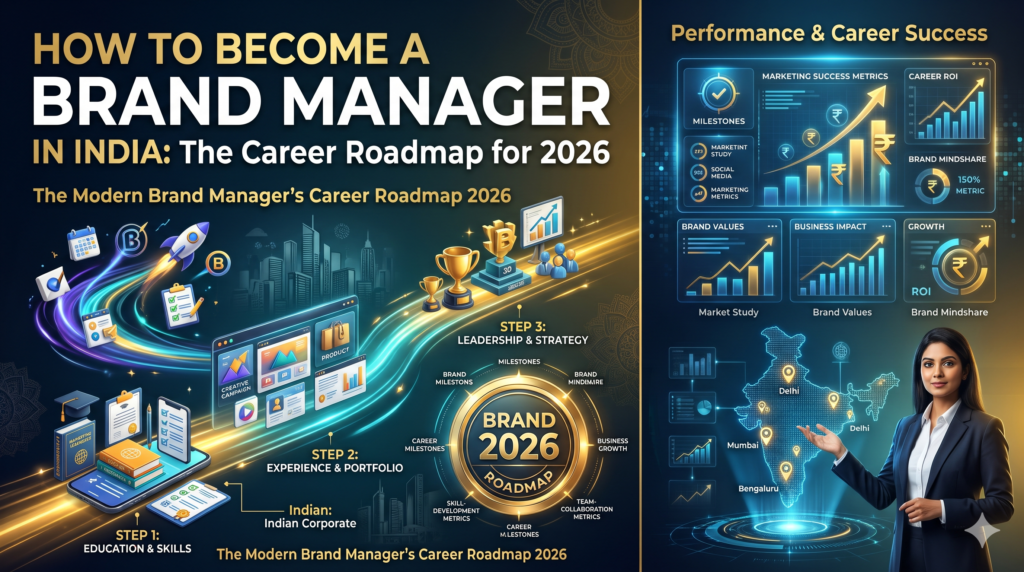
From understanding consumer behaviour to launching products and building brand loyalty, brand management combines creativity, business strategy and analytical thinking. Here is how students and young professionals can enter the field, develop the right skills and progress towards leadership roles.
1. What Does a Brand Manager Actually Do?
A brand manager is responsible for helping a brand remain relevant, competitive and commercially successful. The role connects what consumers think about a product with what a business wants to achieve.
Depending on the company, responsibilities can include developing brand positioning, planning advertising campaigns, researching competitors, coordinating product launches, managing marketing budgets and evaluating campaign performance.
A brand manager working for a skincare company, for example, might identify a new consumer segment, develop a product launch strategy, coordinate an advertising campaign and assess whether the launch improved awareness and sales.
The job is not simply about creating attractive advertisements. It requires understanding the product, its customers, the competition and the financial objectives behind marketing decisions.
The Indian Institute of Management Ahmedabad’s marketing curriculum includes subjects such as brand management, consumer behaviour, marketing research, pricing and digital marketing, reflecting the breadth of knowledge relevant to the profession.
2. Choose the Right Educational Path
There is no single degree required for every brand management position. However, a background in business, marketing, economics, communication or a related discipline can provide a useful foundation.
Route one: Undergraduate degree followed by an MBA. A bachelor’s degree in business administration, commerce, economics or another discipline can lead to a postgraduate management programme. An MBA with marketing electives can provide structured training in consumer insights, strategy, pricing, distribution and business finance.
Route two: Enter marketing directly after graduation. Some graduates begin as marketing executives, management trainees, sales professionals or digital marketing specialists. They can move towards brand management as they develop commercial experience.
Route three: Transition from an adjacent career. Professionals in advertising, market research, product marketing, e-commerce and consumer insights may develop relevant experience for brand management roles.
For students considering an MBA, explore the official MBA programme at IIM Ahmedabad. Its curriculum includes broad management training alongside marketing subjects and electives.
An MBA can be valuable, but it is not a guarantee of a brand management job. The quality of internships, practical projects and relevant experience matters too.
3. Learn the Skills Employers Expect
Successful brand managers combine creative judgement with commercial discipline.
Consumer understanding: Learn how to identify target audiences, interpret research and understand purchasing behaviour.
Brand strategy: Understand positioning, differentiation, brand identity and how a company builds long-term customer preference.
Campaign management: Learn how advertising agencies, designers, media teams, digital marketers and research partners work together.
Data analysis: Become comfortable with spreadsheets, campaign metrics, sales trends, market share and customer research.
Commercial thinking: Understand pricing, distribution, product margins and how marketing decisions influence business performance.
Communication and leadership: Brand managers frequently coordinate multiple teams, present recommendations and manage competing priorities.
The official MBA curriculum at IIM Bodh Gaya includes subjects such as consumer behaviour, brand management, product management, marketing analytics and integrated marketing communication.
4. Get Practical Experience Before Applying
A common mistake among aspiring brand managers is relying entirely on classroom knowledge. Employers also want evidence that candidates can apply marketing principles to real situations.
Start by looking for internships in brand marketing, digital marketing, consumer research, sales and marketing communications. These roles can help you understand how campaigns are planned, executed and evaluated.
You can also develop your own case studies. Select a familiar brand and analyse its audience, positioning, competitors and marketing communication. Propose an improvement, explain the reasoning and define how you would measure success.
For example, a case study could examine how a packaged-food brand might attract younger consumers without losing its existing customer base. Your recommendation should connect the audience insight to a clear positioning, campaign concept, distribution consideration and measurement plan.
Use real information where available and label assumptions clearly. A thoughtful, well-researched project can demonstrate your thinking even if you have not yet managed a major brand.
5. Apply for the Right Entry-Level Roles
Most people do not begin their careers as brand managers. They enter through positions that provide exposure to marketing decisions and business operations.
Search for titles such as:
- Marketing trainee or management trainee
- Assistant brand manager
- Brand executive
- Marketing executive
- Consumer insights analyst
- Product marketing associate
- Digital marketing executive
Large consumer goods companies may offer structured graduate recruitment and management trainee programmes. Other businesses recruit directly for junior marketing roles.
Explore official employer career portals such as Hindustan Unilever Careers, Tata Consumer Products and Nestlé Careers.
Read each vacancy carefully. Some roles emphasise brand strategy, while others focus on sales, distribution, research or digital marketing. Choose opportunities that build the experience you want to develop.
6. Understand the Career Ladder
Brand management responsibilities usually grow as professionals gain experience, although titles vary by company.
| Career stage | Typical responsibilities |
|---|---|
| Marketing intern or trainee | Research, reporting, campaign support and coordination |
| Marketing or brand executive | Campaign execution, competitor analysis and project management |
| Assistant brand manager | Supporting brand plans, budgets, agencies and product launches |
| Brand manager | Managing brand strategy, campaigns, budgets and performance |
| Senior brand manager | Leading larger portfolios, teams and long-term growth plans |
| Marketing director or chief marketing officer | Setting broader marketing strategy and business priorities |
Progression depends on company structure, performance and available opportunities. There is no universal timeline or guaranteed salary at each level.
7. Decide Whether an MBA Is Worth the Investment
An MBA may be useful if you want structured business education, access to management recruitment and exposure to internships and industry networks.
However, compare the total cost with the career opportunities available through the programme. Review placement reports, marketing roles offered, internship quality, alumni outcomes and the proportion of graduates entering relevant functions.
For working professionals, specialised executive education may be another option. IIM Ahmedabad’s Building and Managing Brands in the Present Era programme covers brand identity, the marketing mix and brand equity. Such short programmes can supplement experience, but they are not equivalent to a full-time MBA.
8. Build a 90-Day Preparation Plan
Days 1–30: Learn the fundamentals of segmentation, targeting, positioning, consumer behaviour and marketing metrics. Study three brands in categories that interest you.
Days 31–60: Develop two detailed brand case studies. Include audience insights, competitor analysis, positioning, campaign recommendations and measurement plans.
Days 61–90: Improve your résumé, apply for internships and entry-level marketing roles, practise case interviews and speak with professionals working in brand management.
Continue building commercial understanding alongside creative skills. The strongest candidates can explain not only what they would do, but why it makes business sense.
The Final Word
Becoming a brand manager in India requires a combination of consumer understanding, marketing knowledge, analytical ability and practical experience. A relevant degree can help, but it is only one part of the journey.
Start with an entry-level role that exposes you to customers, campaigns, products and business decisions. Learn how brands compete, build a portfolio of thoughtful case studies and seek opportunities to take ownership of projects.
The goal is not simply to learn how to advertise a brand. It is to understand how to build one that customers choose, trust and return to.